A Thorough Approach From Initial Inspection to Completed Repair
A successful roof repair starts with correctly identifying the source of the problem. Water can travel underneath shingles, along roof decking, and around flashing before appearing inside your home, which means the visible leak isn’t always directly below the damaged area. At All Weather Contractors, we take a systematic approach to roof repairs so we can understand what is causing the problem, determine the extent of the damage, and recommend an appropriate solution.
1. Initial Roof Repair Consultation
The process starts when you contact our team. We’ll ask about the roofing problem you’ve noticed and gather information that can help us understand the situation before the inspection.
This may include:
- When you first noticed the problem
- Whether the roof is actively leaking
- Where water stains or moisture are appearing
- Whether the problem occurs during heavy rain or wind
- Missing or damaged shingles you’ve noticed
- Recent storms or high winds
- Previous repairs to the same area
- Approximate age of the existing roof
These details give our roofers a useful starting point when investigating the affected area.
2. Detailed Roof Inspection
Our team examines the affected area of the roof along with surrounding roofing components that could be contributing to the problem.
Depending on the issue, we may inspect the shingles, roof valleys, flashing, vents, plumbing stacks, chimney areas, roof penetrations, exposed fasteners, sealants and other vulnerable areas.
We look for signs such as cracked or missing shingles, lifted materials, deteriorated flashing, failed seals, improper previous repairs, damaged vent flashing and other potential entry points for water.
The goal is to find the actual source of the roofing problem rather than simply repairing the most obvious symptom.
3. Identify the Cause of the Damage
Once the roof has been inspected, we determine what is most likely causing the problem.
For example, what appears to be a simple roof leak could actually originate from deteriorated chimney flashing, damaged vent flashing, missing shingles, an exposed nail, or another vulnerable roof penetration.
Correct diagnosis is an important part of achieving a lasting repair.
We’ll also evaluate whether the problem appears localized or whether there are signs of more widespread roofing deterioration.
4. Explain Your Roof Repair Options
After identifying the affected area, we’ll explain what we’ve found and recommend an appropriate repair.
We believe homeowners should understand what is wrong, why it happened, and what needs to be done to correct it.
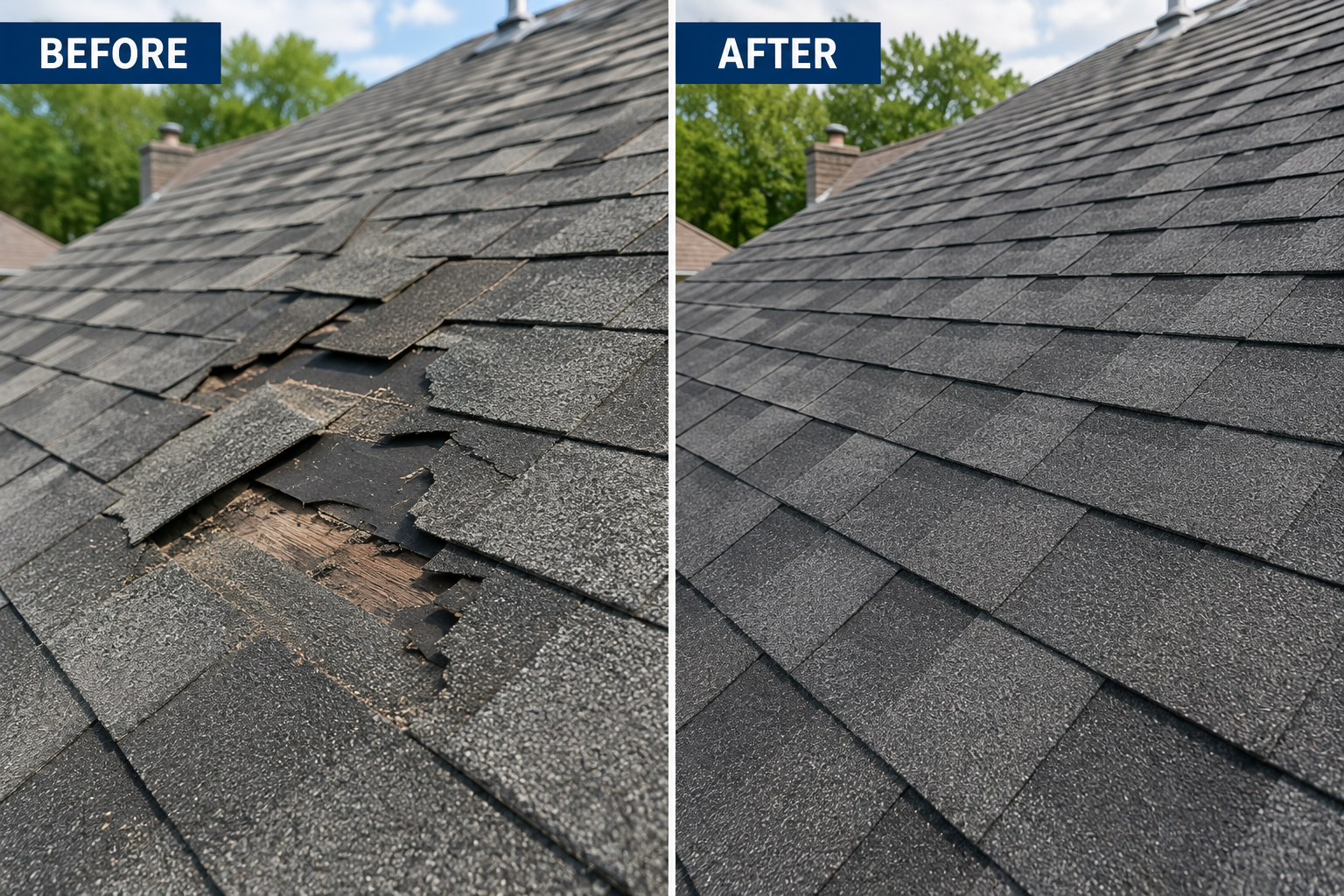
Depending on the condition of your roof, the recommended work could involve replacing damaged shingles, correcting flashing, repairing a leaking vent area, resealing vulnerable penetrations, or repairing another localized section of the roofing system.
If the roof is still in otherwise serviceable condition, our goal is to repair the affected area rather than recommend unnecessary replacement.
5. Prepare the Damaged Area
Before installing new materials, our roofers prepare the affected section properly.
Loose, damaged or deteriorated roofing materials may need to be carefully removed so we can access the underlying area. This allows us to see whether there are additional problems hidden beneath the visible shingles.
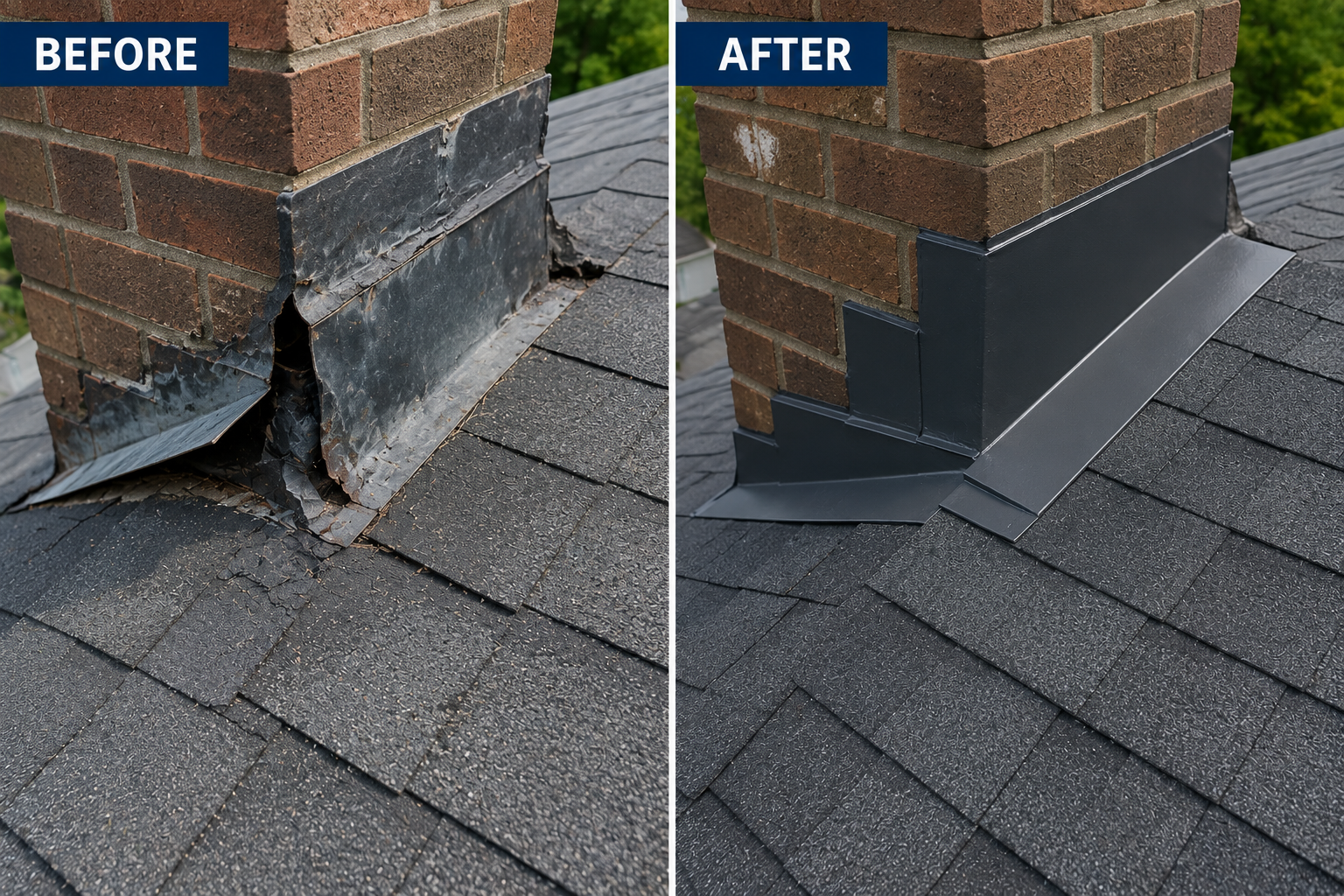
Proper preparation is especially important when repairing areas around vents, chimneys, flashing and roof penetrations, where several roofing components work together to keep water out.
6. Complete the Necessary Roof Repairs
Once the area has been prepared, our team performs the required repair using roofing materials and installation methods appropriate for the existing roofing system.
Depending on the problem, this may include:
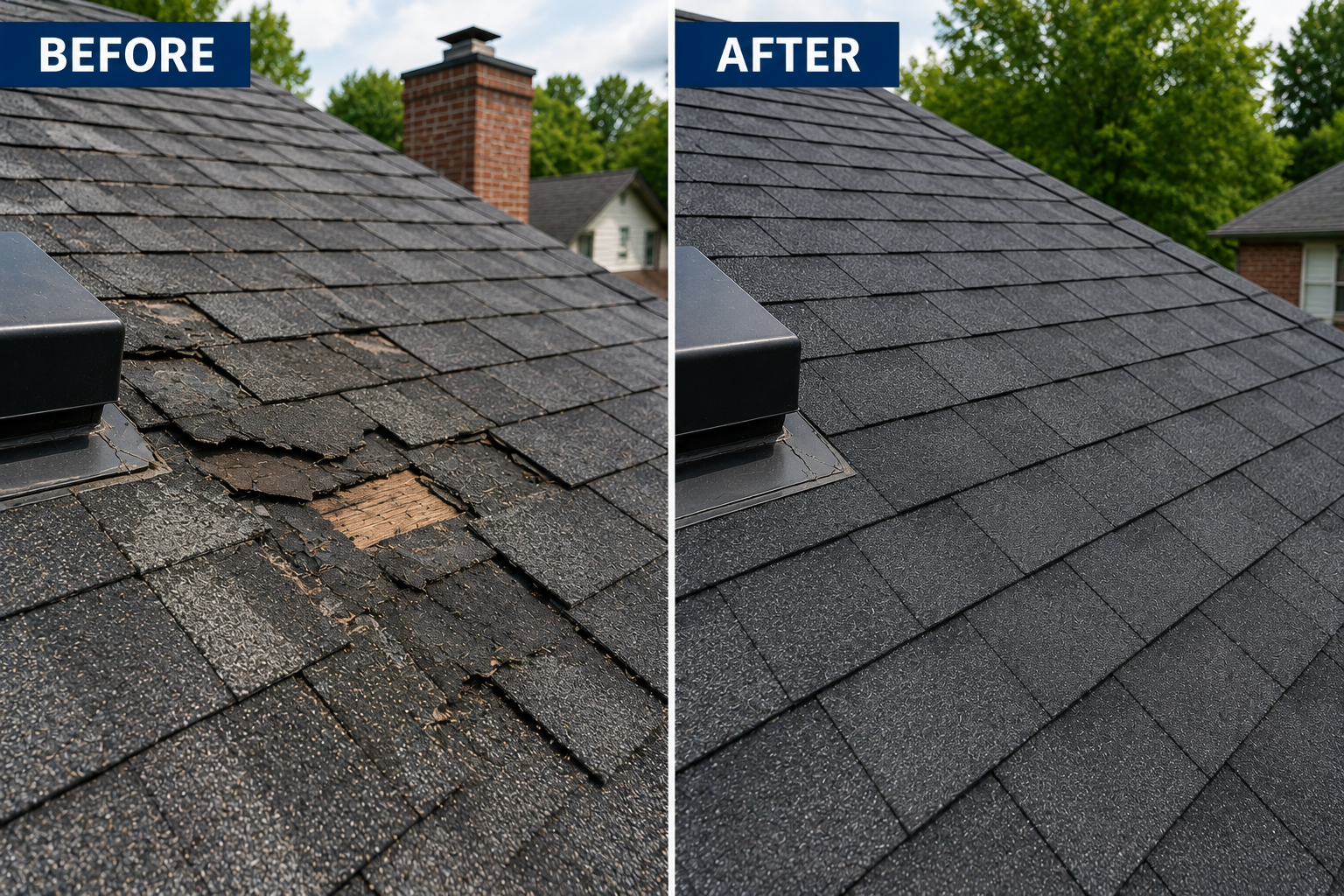
Shingle replacement — Removing damaged, cracked, missing or wind-damaged shingles and installing replacement shingles.
Flashing repair — Repairing or replacing deteriorated flashing around chimneys, walls, valleys and other vulnerable areas.
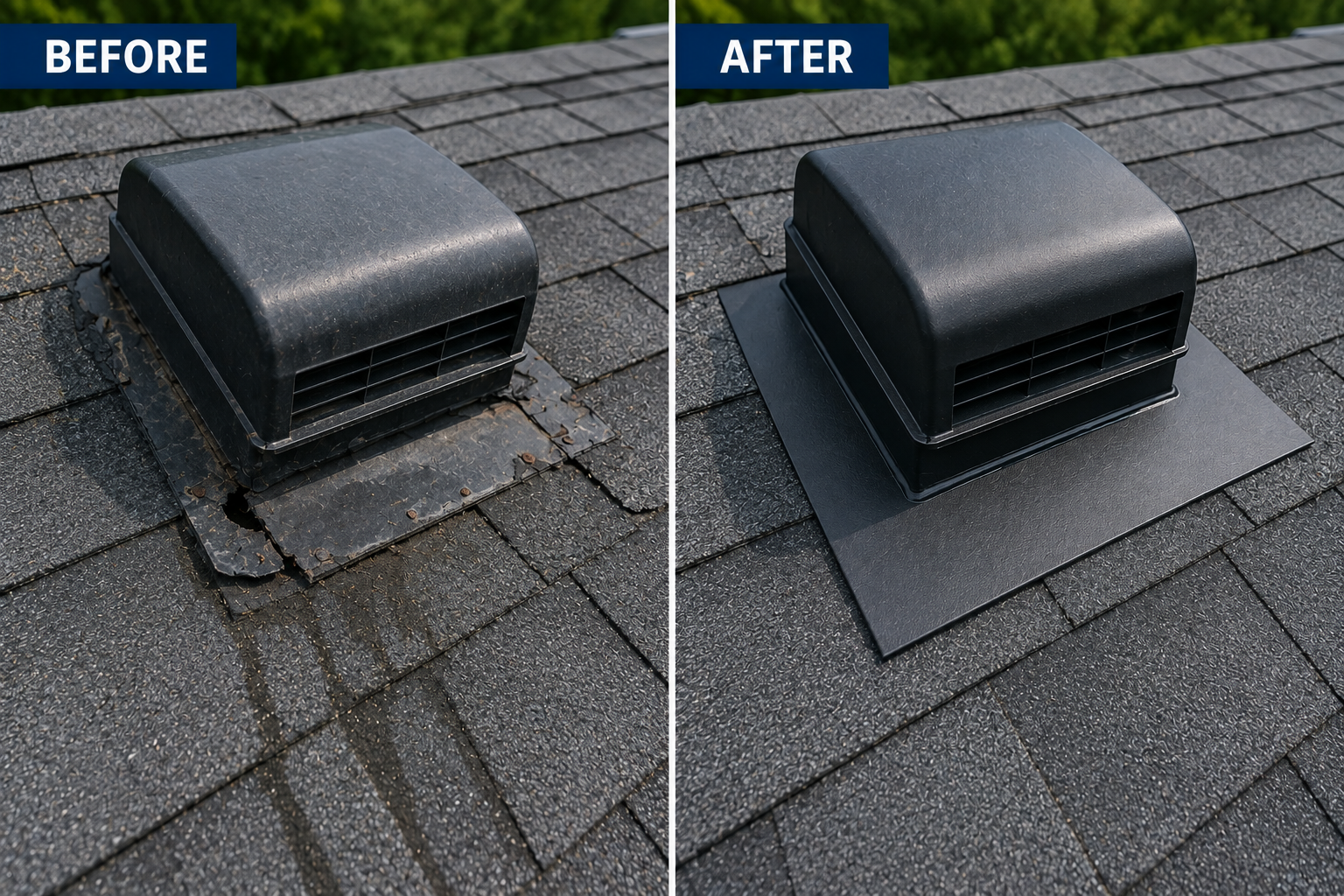
Roof vent repair — Correcting damaged vent flashing, surrounding shingles or seals that may be allowing water into the roofing system.
Leak repair — Addressing the identified source of water intrusion and restoring the affected roofing components.
Storm damage repair — Repairing localized areas affected by wind or severe weather.
Roof penetration repair — Correcting vulnerable areas around pipes, vents and other components that pass through the roof.
Our focus is not simply making the repaired area look better. The repair needs to restore the protective function of the affected roofing system.
7. Integrate the Repair With the Existing Roof
A localized roof repair should work properly with the surrounding roofing materials.
When replacing shingles or repairing flashing, we pay attention to how new materials integrate with the existing roof. Proper overlaps, water-shedding patterns, fastening and sealing are important because rainwater needs to continue moving naturally down and off the roof.
Where practical, we also aim to keep the repaired area visually consistent with the surrounding shingles.
Exact colour matching isn’t always possible on older roofs because existing shingles naturally change appearance from years of sun and weather exposure, but we work to achieve a clean and professional result.
8. Final Roof Repair Inspection
After completing the work, we perform a final review of the repaired area.
We check that the new roofing materials are properly positioned, flashing and penetrations have been addressed, loose materials have been secured, and the work area has been completed according to the planned repair.
We also inspect the immediate surrounding area for anything that may have been overlooked during the repair.
9. Clean Up the Work Area
Roof repairs can involve removing damaged shingles, old flashing, fasteners, packaging and other roofing debris.
Once the repair is finished, our team cleans the work area and removes debris associated with the project. We want your property to be left clean and orderly when the job is complete.
10. Help You Understand What Comes Next
After the repair, we’ll explain what was completed and let you know if there are other areas of the roof you should keep an eye on.
If the rest of the roof remains in good condition, you may simply need normal maintenance and periodic inspections going forward.
If we notice signs that the overall roofing system is aging or beginning to deteriorate, we’ll explain what we observed so you can plan ahead rather than being surprised by future problems.
Roof Repair Done With the Right Approach
At All Weather Contractors, we believe roof repair shouldn’t be about applying a quick patch and hoping the leak disappears. It should start with understanding why the problem happened in the first place.
From the initial inspection and diagnosis to material removal, repair, final inspection and cleanup, our team takes a careful approach to restoring damaged roofing areas and helping protect your home from further water intrusion.